
North Park Chop Suey Restoration
The Chop Suey Sign on University Avenue Has Been Waiting. Here’s the Story Behind It.
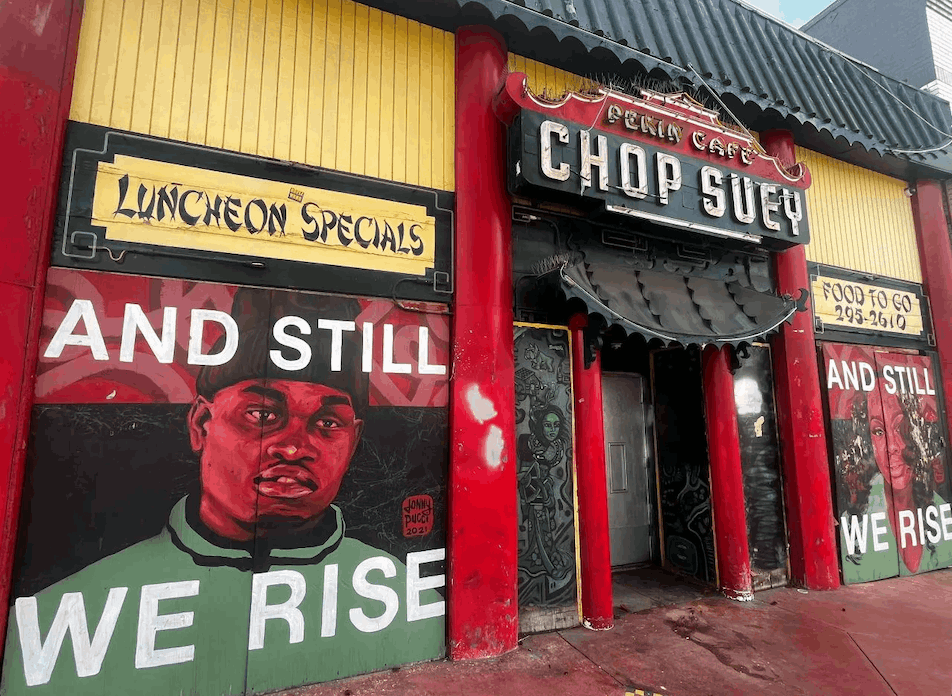
There are buildings you recognize before you know anything about them.
You know the colors. The shape of the roof. The sign you have passed on your way somewhere else so many times that it has become part of the route.
For a lot of people in North Park, the old Pekin Cafe Chop Suey building is one of those places.
The red columns. The decorative facade. Those enormous letters announcing CHOP SUEY above University Avenue.
The restaurant closed in 2019. But the landmark stayed, holding its place on a street that kept moving around it.
Now the property at 2877 University Avenue is being restored as Chop Suey Lounge & Ginger Roots, a new dining project with plans to preserve recognizable pieces of the exterior and give the interior a different future. The latest owner interview points to an opening sometime in 2027.
That is the current update.
The reason I think it is worth caring about starts much earlier.
Before the Chop Suey Sign, There Was a Furniture Store
The North Park Historical Society’s research traces the building to 1922, when it housed the North Park Furniture store.
That is already a detail I love.
The building most of us associate with a very specific restaurant identity began as something entirely different. Furniture first, followed by a paint business, before restaurant work began in 1931.
Historical researchers found plumbing, electrical, gas, and plastering permits from that summer. They also found a permit for an electric sign.
Then a July 1931 newspaper advertisement announced that Pekin Cafe had opened.
Its introductory offer? A dinner normally priced at a dollar, offered for 50 cents so the restaurant could introduce itself to San Diego.
That is a wonderfully tangible beginning. An address, a new sign, a meal, and an invitation to the neighborhood.
Think about how many businesses have opened around North Park since then. How many storefronts have changed names. How many generations have developed their own version of what this neighborhood is supposed to feel like.
This restaurant stayed part of that story for nearly nine decades.
The Facade Became a Piece of the Neighborhood
The historical society documents a major decorative update in 1935. The distinctive exterior had become a recognizable part of the streetscape long before most current residents arrived.
An archival advertisement, a photograph, and the building itself let you follow that continuity across decades.
That is what makes a landmark more interesting than a date on a plaque.
You can compare what was advertised then with what you can still recognize now.
The oversized chop suey lettering is part of the story, too. It promoted a familiar Chinese-American dish so prominently that the food became inseparable from the building’s public identity.
People might not remember the precise spelling on the smaller name. They remember the Chop Suey sign.
That is a pretty effective piece of neighborhood branding.
This Was a Family Business, Not Just an Old Dining Room
The property’s history involves a circle of early operators, relatives, friends, and later generations. The historical society’s account is more detailed than the simplified version that assigns the entire beginning to one person.
For many of its later decades, the restaurant was associated with the Fong family. Leo Fong’s son Kenneth and Kenneth’s wife Maria became central to its later operation, and their daughters spent time working there.
That changes how I look at the building.
A restaurant that lasts this long becomes a workplace, a source of family income, and a place customers fold into their own routines. Its meaning accumulates one ordinary visit at a time.
In 2023, Eater reported that the family still missed cooking for and visiting with customers after the closure.
That detail says more to me than calling something iconic for the twentieth time.
The connection ran in both directions. Customers remembered the place. The family remembered the customers.
Its Next Chapter Has Already Taken Longer Than People Expected
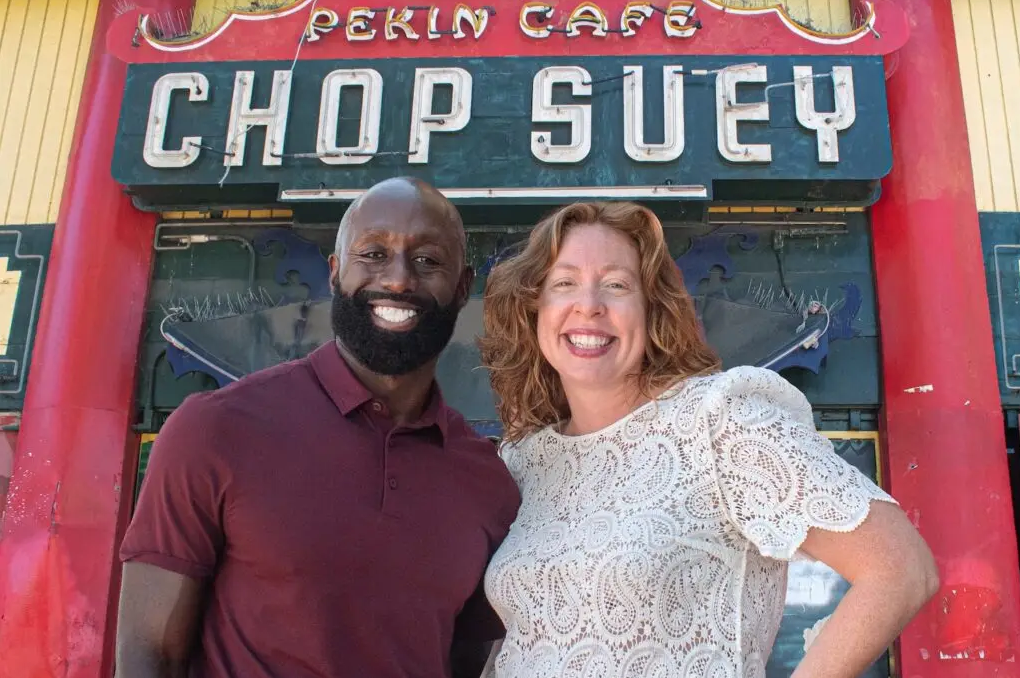
The years after 2019 were not simply a pause while someone waited to unlock the door.
Eater’s reporting described an earlier tenant effort that involved substantial interior work before the project was abandoned. The restaurant space remained without the next business people could actually visit.
That is useful context when a building seems frozen from the sidewalk.
Work, negotiations, design, and setbacks can be happening without producing the visible result everyone is waiting for.
The current team, Jacquelyn Kelly and Jason Bess, brings hospitality and construction experience to the project. They are working with architect Chris Bord and an interior-design team on a new use for the roughly 3,500-square-foot space.
Kelly’s background includes local restaurant operations. Bess brings experience with the physical realities of buildings.
For a project like this, both sides matter.
You need an idea people want to experience. You also need to make an old space capable of delivering it.
What Chop Suey Lounge & Ginger Roots Is Supposed to Become
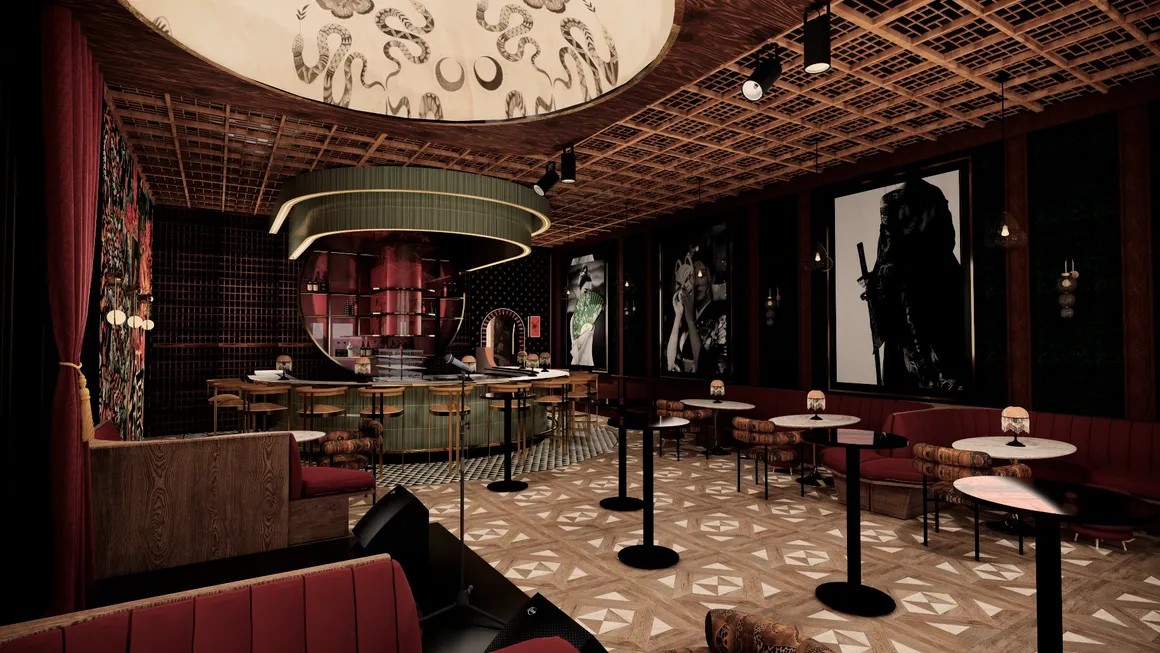
The larger front experience is planned around American-Chinese food, cocktails, service carts, booth seating, and live jazz.
Behind it, Ginger Roots is envisioned as a smaller dining experience with an eight-seat communal chef’s table near the kitchen.
Imagine the contrast as a concept: a social dining room with music in front, then a limited-seat meal where the kitchen becomes a more immediate part of the evening.
Those are two different reasons to return to the same address.
The restoration details are what connect that future to the past. The latest interview describes real neon for the sign and trim, historically sympathetic wooden entrance doors, and salvaged lanterns incorporated into the interior.
Those choices will not recreate every version of the original restaurant. A new business cannot reproduce decades of someone else’s memories.
But it can recognize that it is inheriting something people care about.
The Opening Outlook Has Changed
Earlier project coverage pointed to a late-2026 opening.
In the October 29 update, Kelly said the team was looking at sometime in 2027, with liquor and cabaret approvals still outstanding.
There is no confirmed opening day.
If you saved an older article announcing a December debut, the newer interview is the timing to use. The project is still a future dining destination, not somewhere to book dinner this week.
What I Hope Survives Along With the Sign
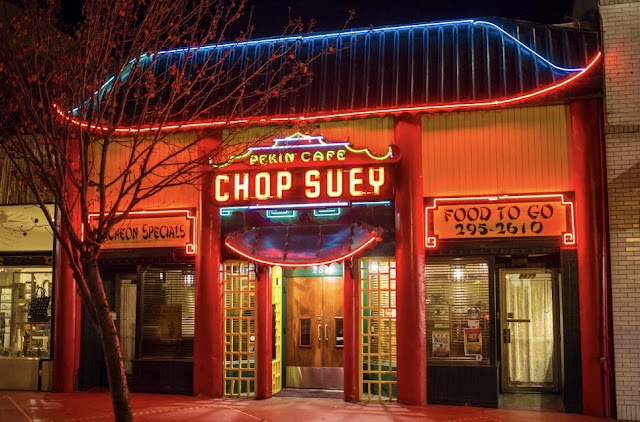
I like the prospect of bringing the neon back. Of course I do.
But the more interesting question is whether the building can become a lived-in part of the neighborhood again.
A sign is something you recognize. A place you return to becomes part of your life.
That is where restoration gets exciting for me. The old landmark gives a street continuity, while the new use creates a reason for people to make their own connection to it.
Preservation also involves responsibilities. The team is taking on a building with a Chinese-American restaurant legacy and a long family history. The strongest result would make that history visible rather than treating it as decoration around a new concept.
The finished place will have to earn its own reputation. Until then, the project is worth following for the care it proposes to give a familiar piece of North Park.
Next time you pass the old sign, you have a little more to picture.
A furniture store. A 50-cent introductory dinner. Families working through decades of restaurant life. A darkened space waiting for another chance.
And, potentially, a new evening beginning under a familiar glow.
I love this frickin city.
Planning and related reading
The restaurant is not open. View the exterior from public areas and respect construction boundaries. Suggested internal links: a North Park neighborhood guide, central San Diego architecture stories, and a buyer consultation page.
About Matt
Matt Thornberg is a San Diego real estate agent and team leader of Thornberg Home Group who loves discovering how familiar places shape neighborhood life. He helps first-time homebuyers and current homeowners move up, downsize, or relocate with deep local knowledge, straight-shooting advice, and proven marketing and negotiation strategy. Matt specializes in the central San Diego neighborhoods surrounding Balboa Park, including Golden Hill, South Park, North Park, Mission Hills, University Heights, Normal Heights, Hillcrest, and Bankers Hill. Let’s talk about your next move.
Sources
- North Park Historical Society: A Tribute to the Pekin Cafe
- Eater: The family and the search for a successor, December 2023
- San Diego Magazine: Project background, April 2026
- Times of San Diego: Restoration and revised opening outlook, October 2026
Categories
- All Blogs (7)
- downtown san diego (2)
- living in san diego (4)
- north park (1)
- san diego (5)
- san diego history (4)
- san diego lifestyle (5)
- san diego living (5)
- san diego neighborhoods (2)
- san diego news (4)
- san diego nightlife (1)
- san diego real estate (2)
- san diego restaurants (1)
- south park san diego (2)
Recent Posts
GET MORE INFORMATION